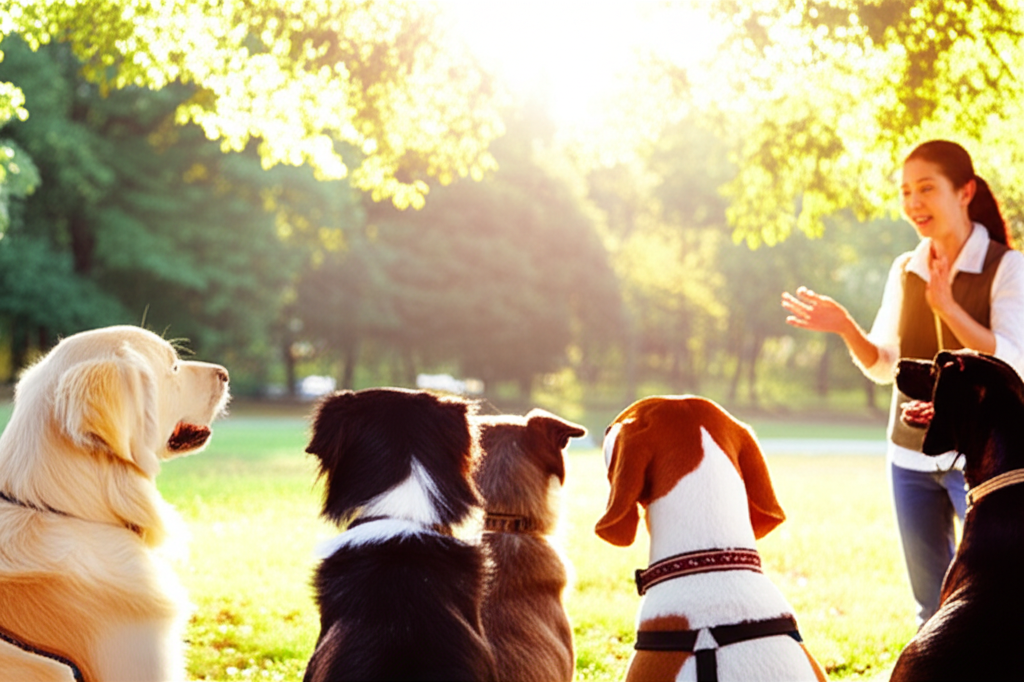
Welcome to the first step in your journey towards creating a harmonious relationship with your canine friend. In this section, we delve into the world of dog communication. Understanding how to effectively communicate with your dog is foundational not only for training but also for developing a deeper bond. Let’s explore the essential principles that will empower you to convey your messages clearly and effectively.
### Understanding Canine Communication
Dogs, much like humans, are highly communicative beings but rely heavily on non-verbal cues. Recognizing and interpreting your dog’s body language is crucial. Pay attention to the tail position, ear orientation, and facial expressions. A wagging tail doesn’t always mean happiness; it could signal excitement, anxiety, or even aggression depending on the context. Similarly, a dog with ears perked forward is alert and interested, while ears back can indicate submission or fear.
### Vocal Commands: Choosing Your Words Carefully
While dogs primarily communicate through non-verbal means, vocal commands are integral in teaching specific behaviors or responses. Clarity and consistency are key. Choose clear, simple command words and stick to them. For example, use "sit" rather than "sit down." Consistency extends to everyone interacting with the dog—ensure all family members or anyone else involved in the training uses the same language.
### The Importance of Tone
The tone of your voice can significantly impact your dog’s understanding of the command. A calm, firm tone conveys authority, while a high-pitched voice may sound playful or reassuring. Avoid shouting, as dogs may perceive it as aggressive and become anxious or fearful. Instead, use positive reinforcement, such as praise or treats, when commands are followed correctly.
### Timing: The Key to Effective Training
Timing is critical when delivering commands and rewards. Your dog associates immediate consequences with their action, so rewards or corrections should be instant. If your dog successfully sits on command, reward them within a second or two. Delays can lead to confusion, making it difficult for the dog to connect the action with the outcome.
### Building a Mutually Respectful Relationship
Your interaction with your dog should always be based on mutual respect. Build trust by being predictable in your responses and respectful of your dog’s signals. Understand that teaching takes time, patience, and persistence. Avoid harsh corrections as they can damage trust and may lead to further behavioral issues.
### Practice Makes Perfect
Regular, short training sessions are more effective than infrequent, lengthy ones. Keep sessions varied and engaging to maintain your dog’s interest and enthusiasm. Use these opportunities to reinforce positive behaviors, introduce new commands, and practice communication skills.
In summary, speaking your dog’s language involves mastering body language, refining vocal commands, recognizing the power of tone, and prioritizing timing in interactions. Through these elements, you can build a foundation of understanding that will greatly enhance your training efforts.